Vitus Bering Airport
Elizovo, Kamchatka, Russia, 2025
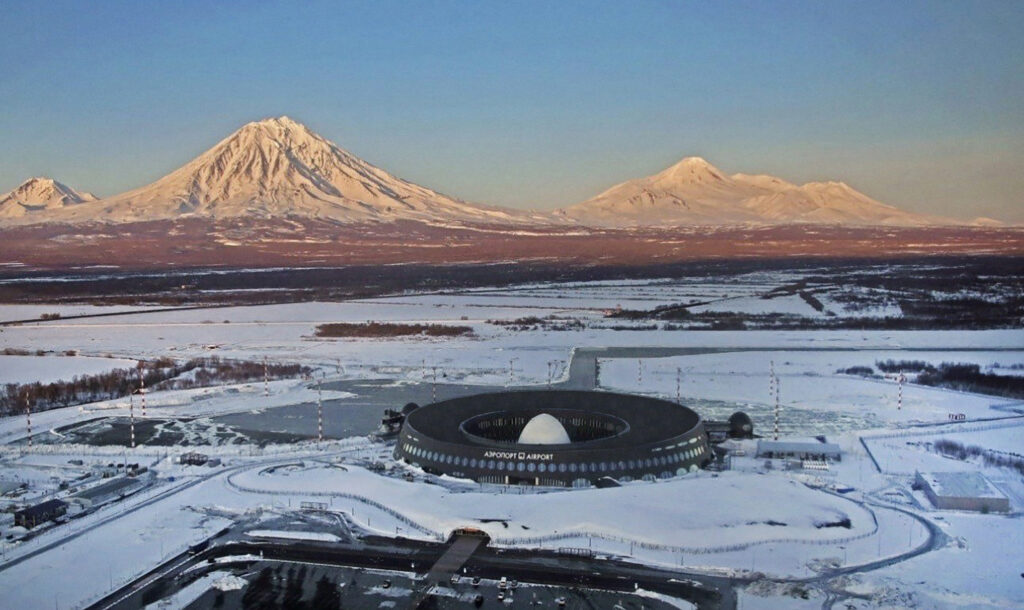
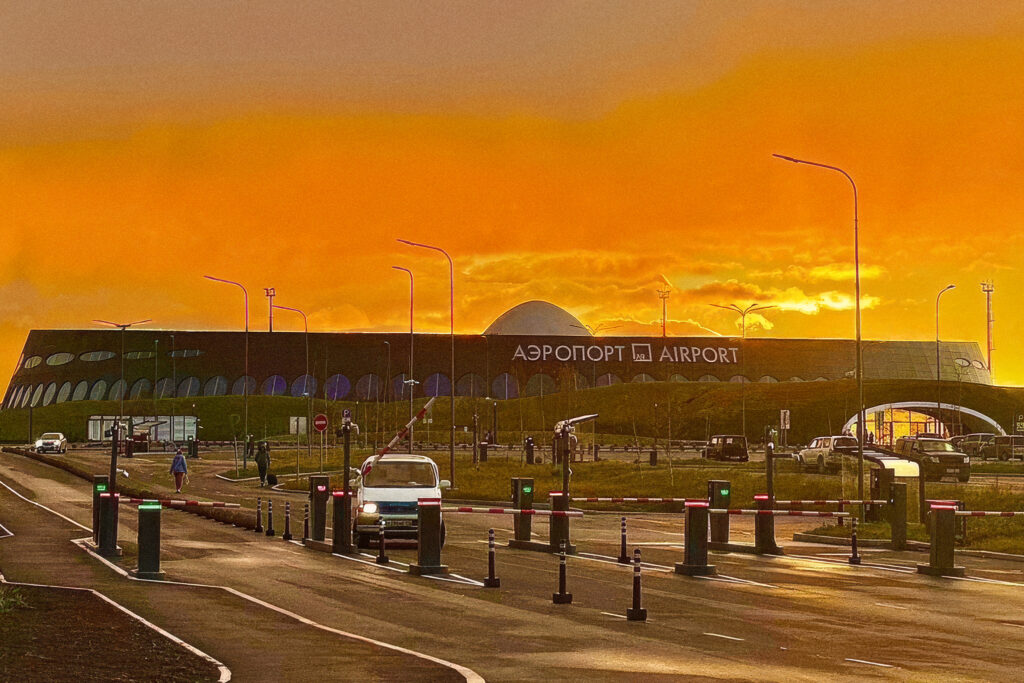
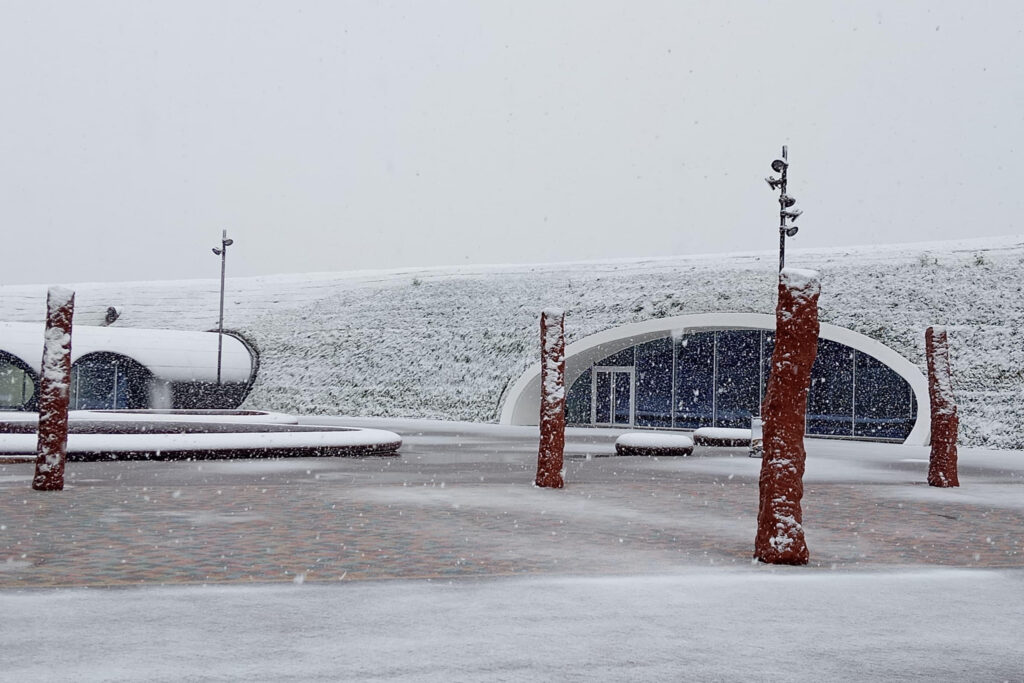
The 50,000 sqm design of Vitus Bering Airport draws inspiration from the Gorely volcano in Kamchatka, with an ice lake at its centre, present most of the year.
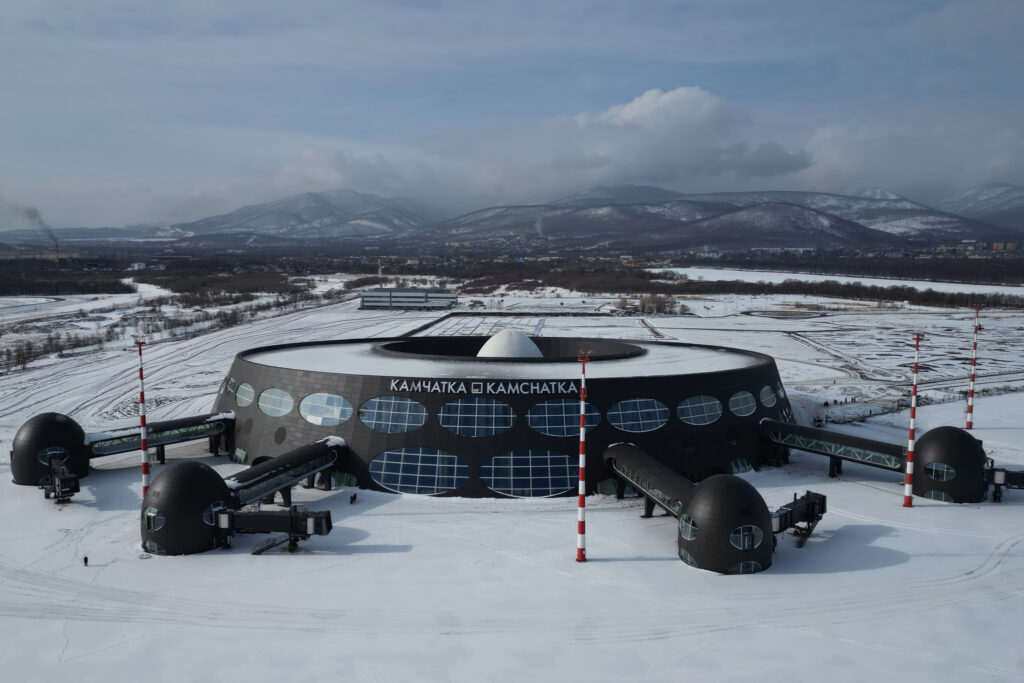
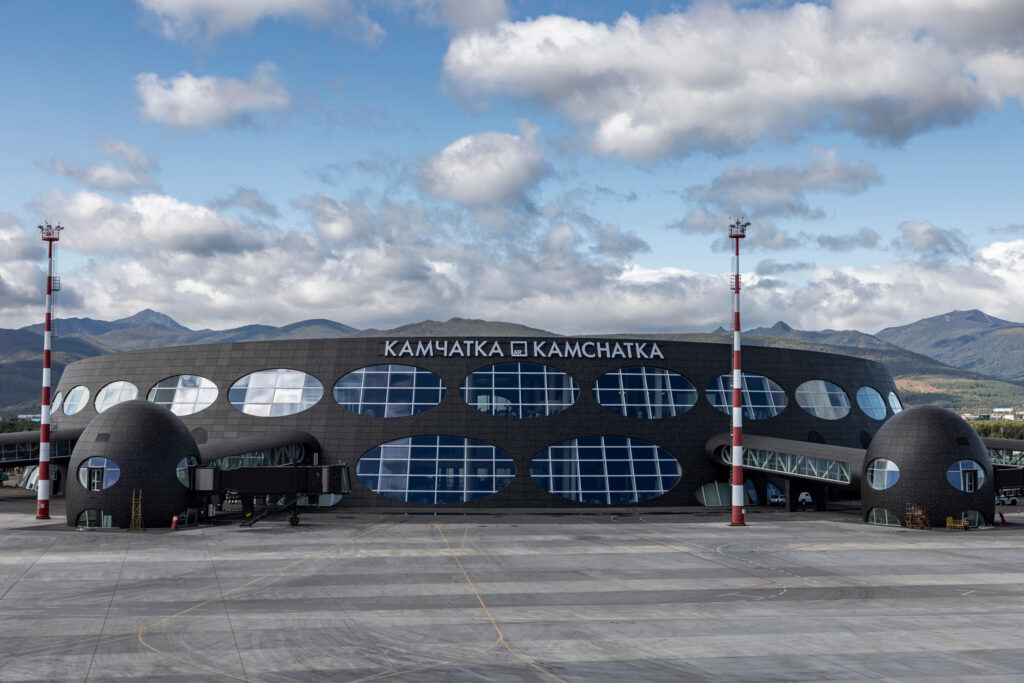
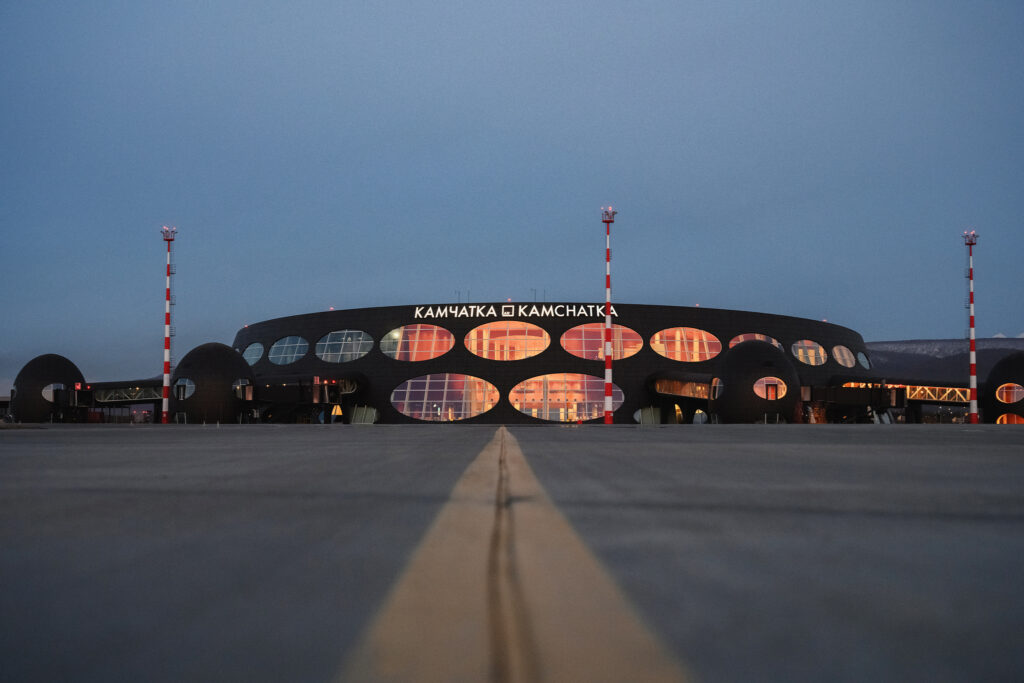
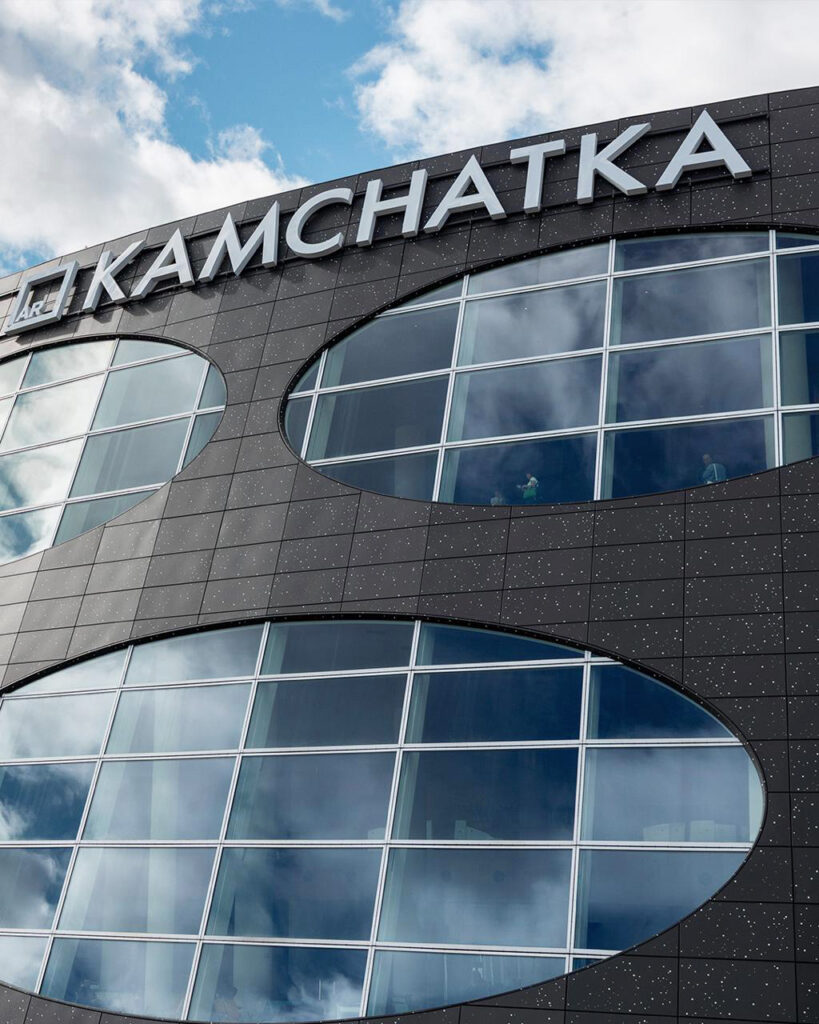
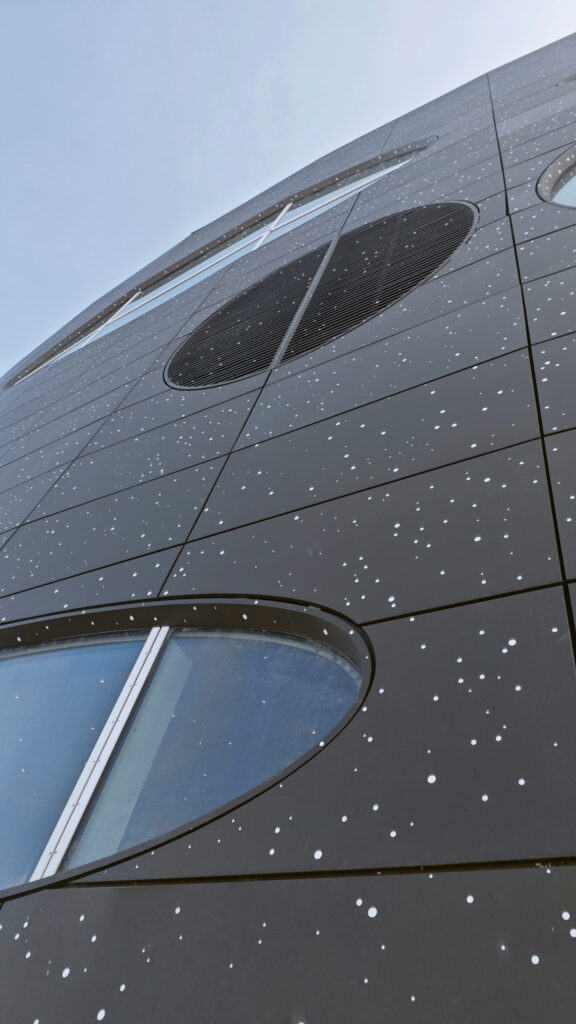
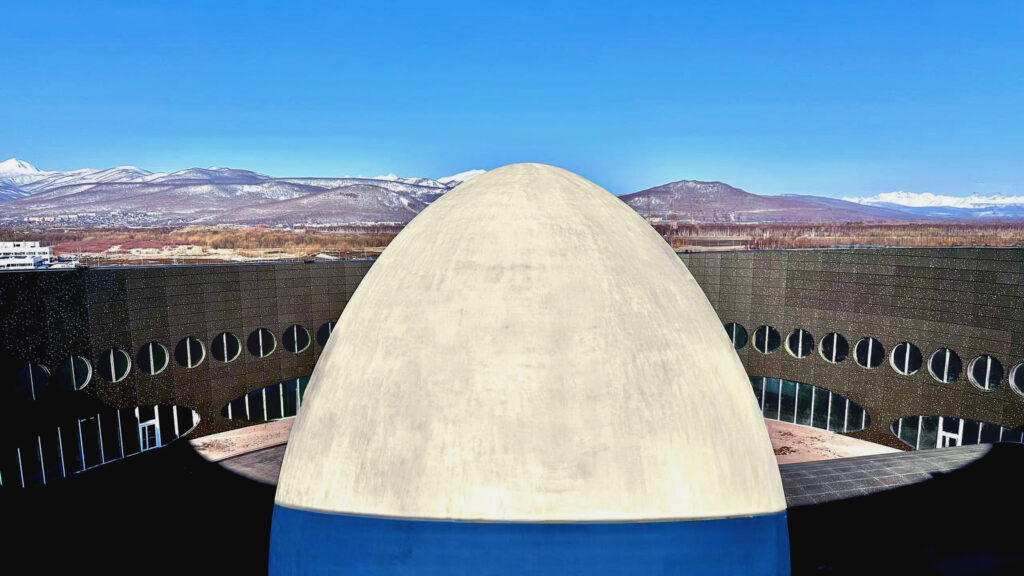
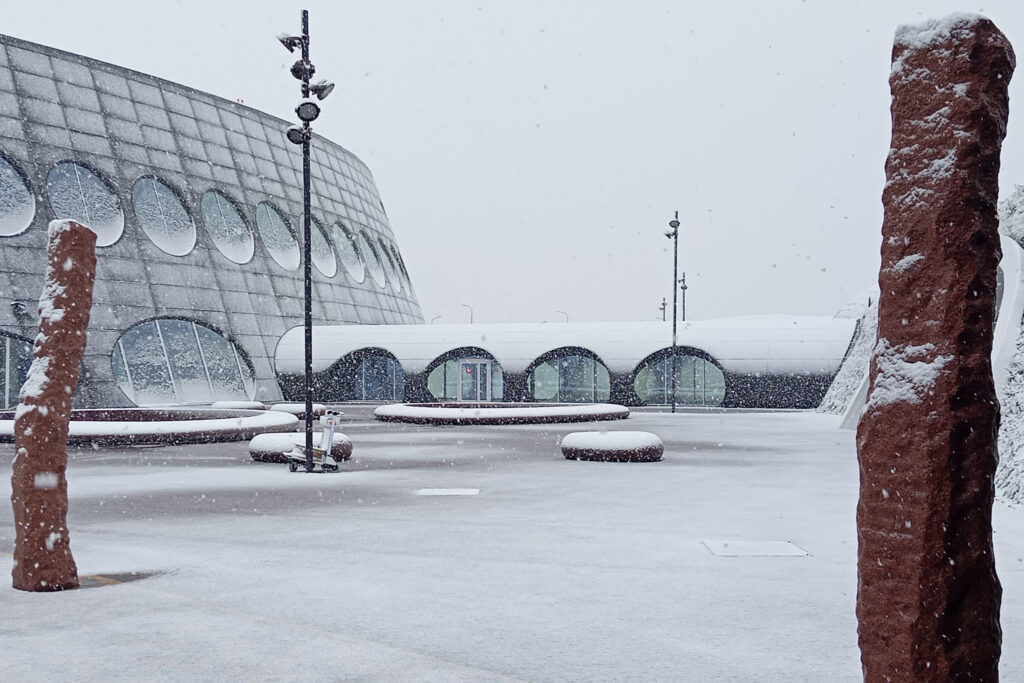
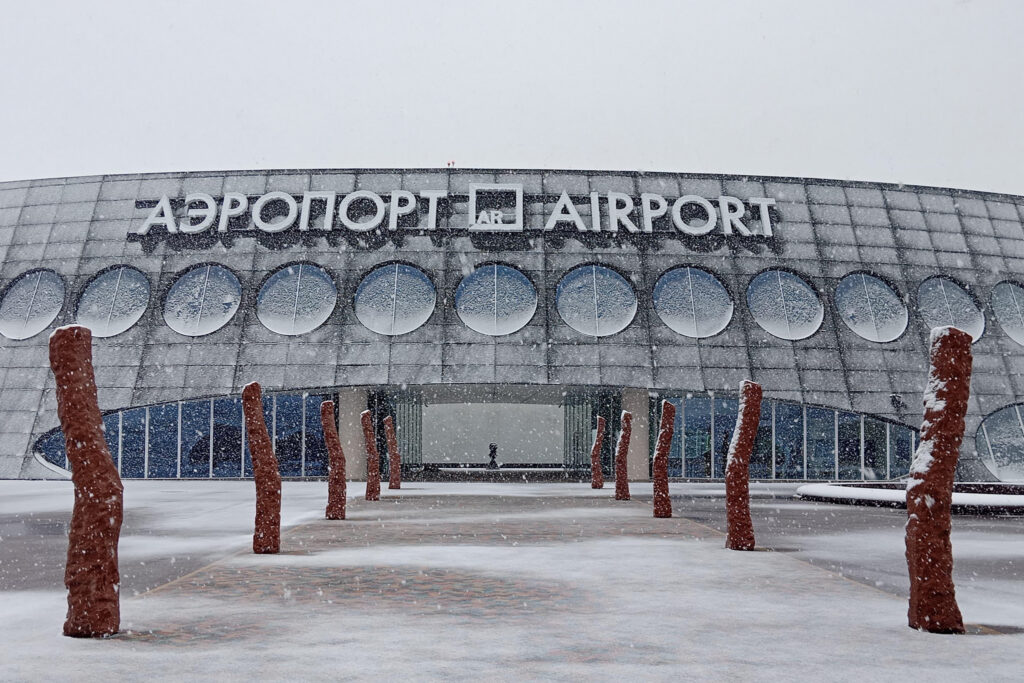
The circular inner atrium and the passenger circulation follow the round shape of the overall airport design. The deep brown aluminium façade panels reflect the local earthy colour as a base, with tiny white dots printed on, to reduce the severity and bring a sense of lightness. The facade is perforated by huge circular and oval-shaped windows.
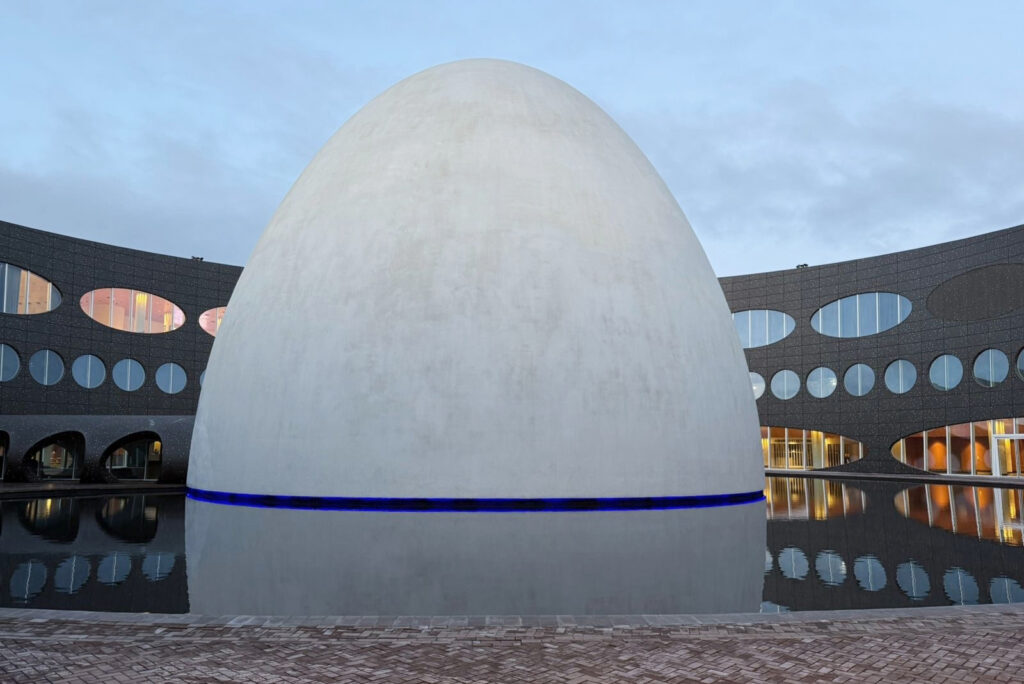
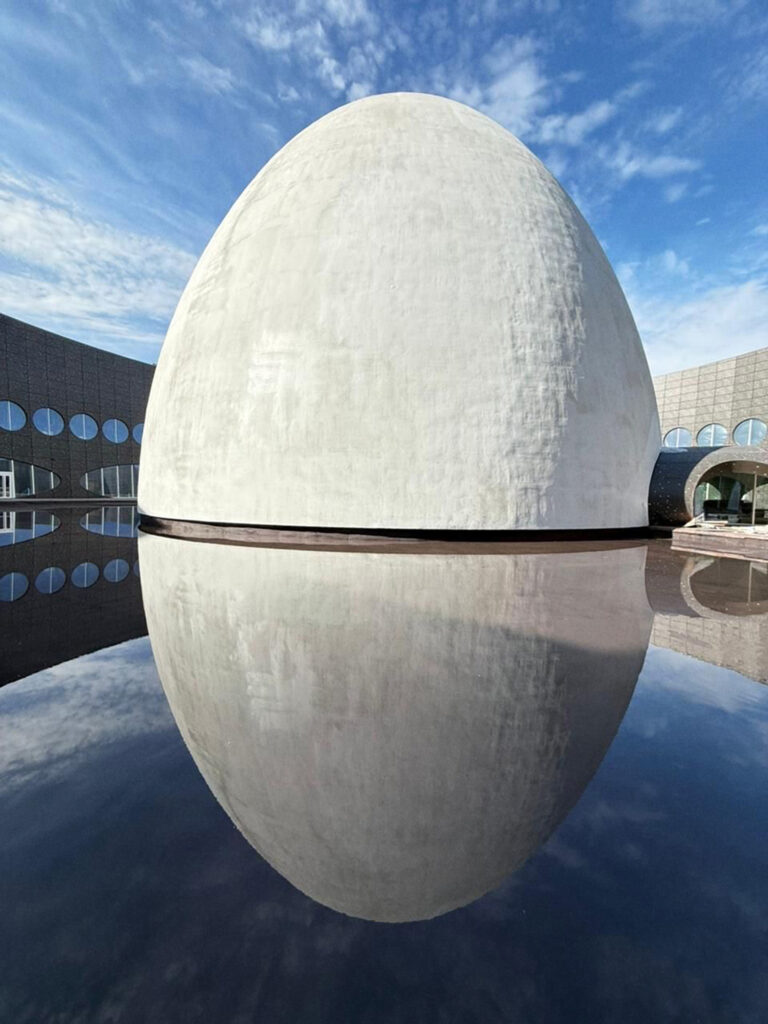
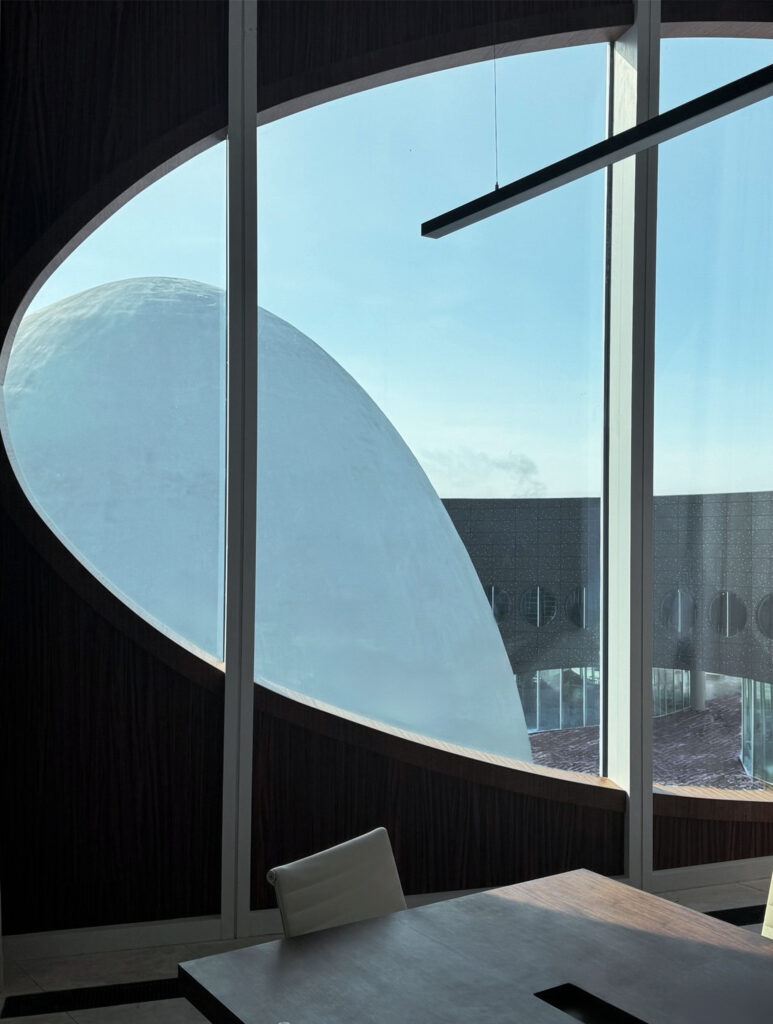
Arising at the centre of the atrium stands a symbolic 650 sqm egg-shaped volume, housing the Events hall. The design of the hall is inspired by the universal shape of an egg and its white ‘skin’, made of spray foam, suggests a timeless monolithic organic shell. It measures 24m in height and 30m in diameter. Its open space interior, which follows the egg shape, brings to mind the Pantheon’s interior in Rome and it is naturally lit at the top from a frameless 1.5 meter oculus made in glass. The inner skin has a warm white acoustic finish, perforated with hundreds of tiny light dots, like stars. The floor finish is a classical oak parquet. This egg-shaped space hosts multifunctional events, such as conferences, concerts and weddings – thus creating a social connection between the airport and the local residents of the nearby town of Petropavlovsk.
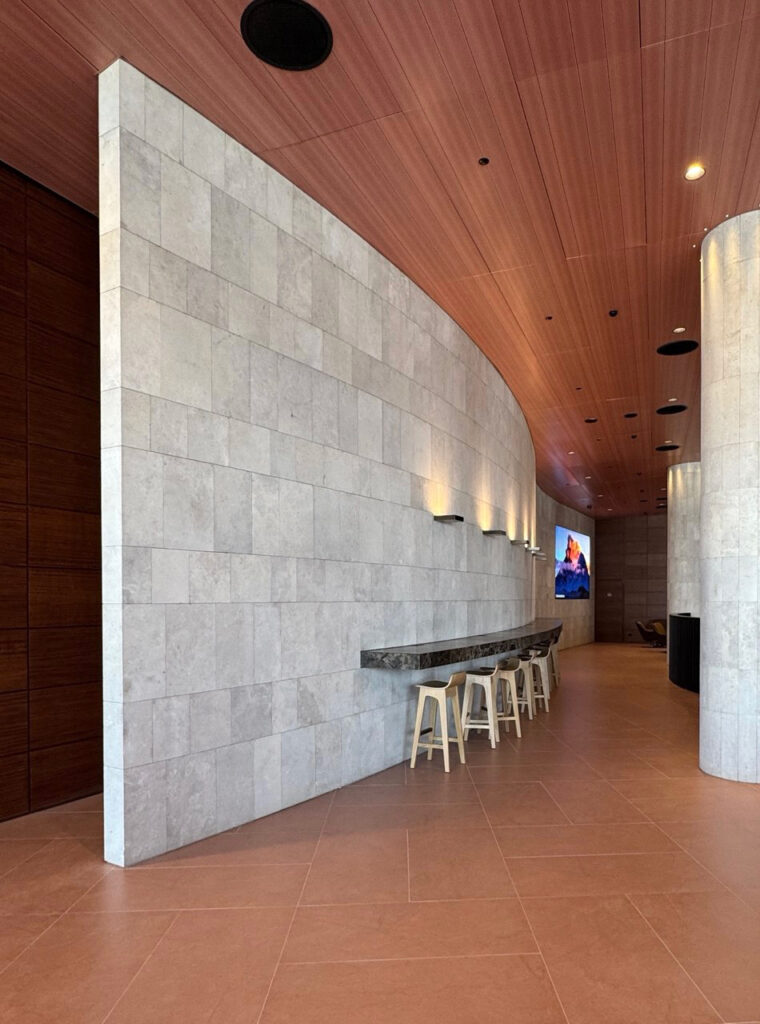
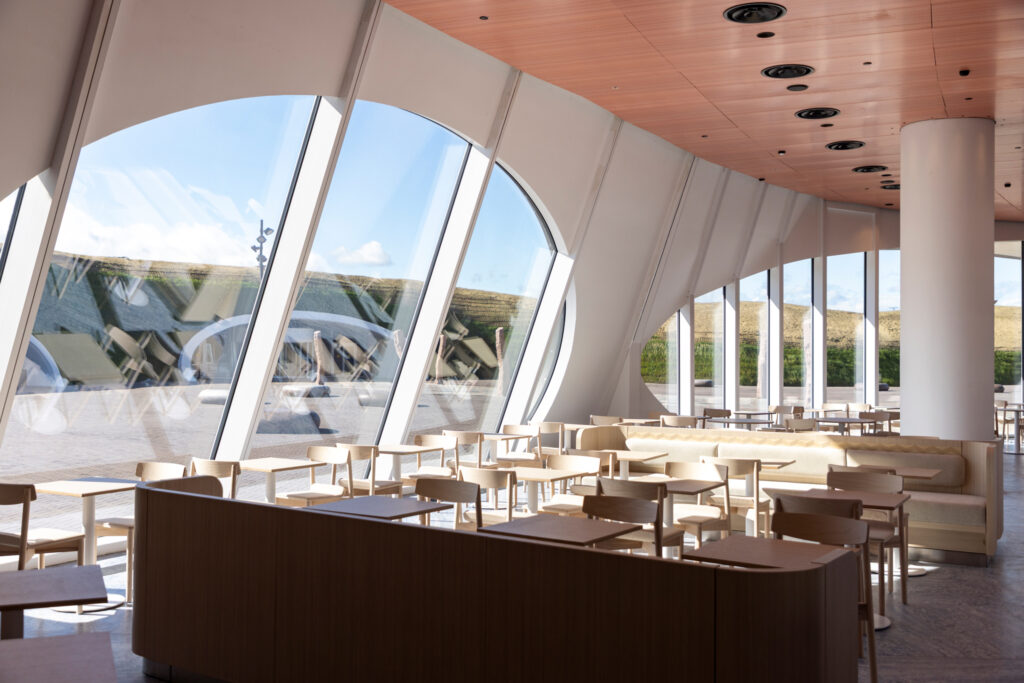
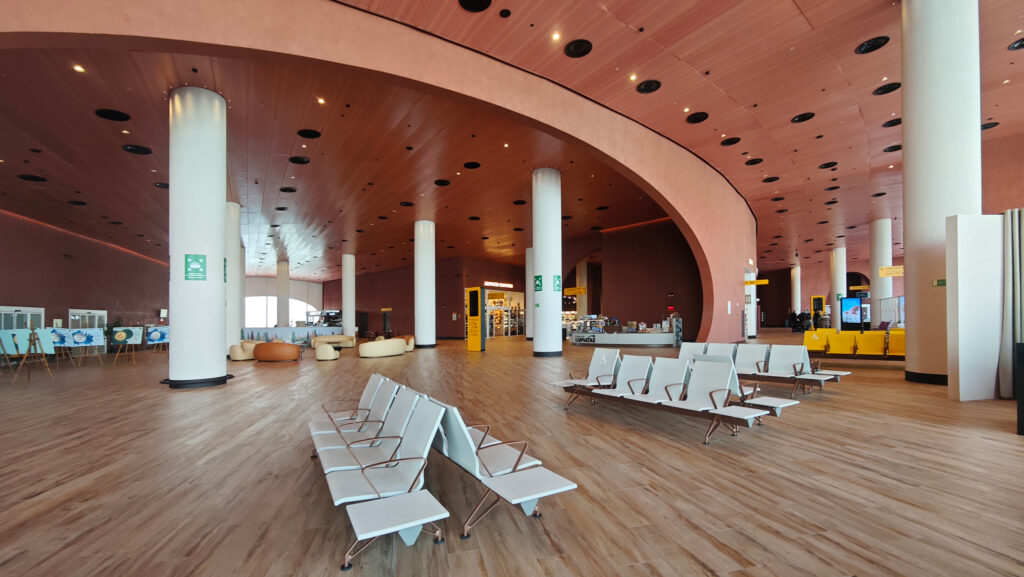
The interior of the airport incorporates Kamchatka’s natural colour palette and materials of earthy hues in stone and wood. In particular, the reddish stucco walls and the pink-hued pear wood ceiling convey to the visitor a feeling of warmth, balancing out the cold temperatures of Kamchatka and contrasting with the outer building shell of metal and glass.
This natural materials aesthetic and atmosphere is continuously present, pervading the hotel, lounges, and main terminal.
The floors, walls, ceilings, and features, though different in their material essence, are seamlessly bonded in a harmonious visual unity.
It is the first international airport to dare this aesthetic.
Vitus Bering Airport
Elizovo, Kamchatka, Russia, 2025
The 50,000 sqm design of Vitus Bering Airport draws inspiration from the Gorely volcano in Kamchatka, with an ice lake at its centre, present most of the year.
The circular inner atrium and the passenger circulation follow the round shape of the overall airport design. The deep brown aluminium façade panels reflect the local earthy colour as a base, with tiny white dots printed on, to reduce the severity and bring a sense of lightness. The facade is perforated by huge circular and oval-shaped windows.
Arising at the centre of the atrium stands a symbolic 650 sqm egg-shaped volume, housing the Events hall. The design of the hall is inspired by the universal shape of an egg and its white ‘skin’, made of spray foam, suggests a timeless monolithic organic shell. It measures 24m in height and 30m in diameter. Its open space interior, which follows the egg shape, brings to mind the Pantheon’s interior in Rome and it is naturally lit at the top from a frameless 1.5 meter oculus made in glass. The inner skin has a warm white acoustic finish, perforated with hundreds of tiny light dots, like stars. The floor finish is a classical oak parquet. This egg-shaped space hosts multifunctional events, such as conferences, concerts and weddings – thus creating a social connection between the airport and the local residents of the nearby town of Petropavlovsk.
The interior of the airport incorporates Kamchatka’s natural colour palette and materials of earthy hues in stone and wood. In particular, the reddish stucco walls and the pink-hued pear wood ceiling convey to the visitor a feeling of warmth, balancing out the cold temperatures of Kamchatka and contrasting with the outer building shell of metal and glass.
This natural materials aesthetic and atmosphere is continuously present, pervading the hotel, lounges, and main terminal.
The floors, walls, ceilings, and features, though different in their material essence, are seamlessly bonded in a harmonious visual unity.
It is the first international airport to dare this aesthetic.
Vitus Bering Airport
Elizovo, Kamchatka, Russia, 2025
The 50,000 sqm design of Vitus Bering Airport draws inspiration from the Gorely volcano in Kamchatka, with an ice lake at its centre, present most of the year.
The circular inner atrium and the passenger circulation follow the round shape of the overall airport design. The deep brown aluminium façade panels reflect the local earthy colour as a base, with tiny white dots printed on, to reduce the severity and bring a sense of lightness. The facade is perforated by huge circular and oval-shaped windows.
Arising at the centre of the atrium stands a symbolic 650 sqm egg-shaped volume, housing the Events hall. The design of the hall is inspired by the universal shape of an egg and its white ‘skin’, made of spray foam, suggests a timeless monolithic organic shell. It measures 24m in height and 30m in diameter. Its open space interior, which follows the egg shape, brings to mind the Pantheon’s interior in Rome and it is naturally lit at the top from a frameless 1.5 meter oculus made in glass. The inner skin has a warm white acoustic finish, perforated with hundreds of tiny light dots, like stars. The floor finish is a classical oak parquet. This egg-shaped space hosts multifunctional events, such as conferences, concerts and weddings – thus creating a social connection between the airport and the local residents of the nearby town of Petropavlovsk.
The interior of the airport incorporates Kamchatka’s natural colour palette and materials of earthy hues in stone and wood. In particular, the reddish stucco walls and the pink-hued pear wood ceiling convey to the visitor a feeling of warmth, balancing out the cold temperatures of Kamchatka and contrasting with the outer building shell of metal and glass.
This natural materials aesthetic and atmosphere is continuously present, pervading the hotel, lounges, and main terminal.
The floors, walls, ceilings, and features, though different in their material essence, are seamlessly bonded in a harmonious visual unity.
It is the first international airport to dare this aesthetic.